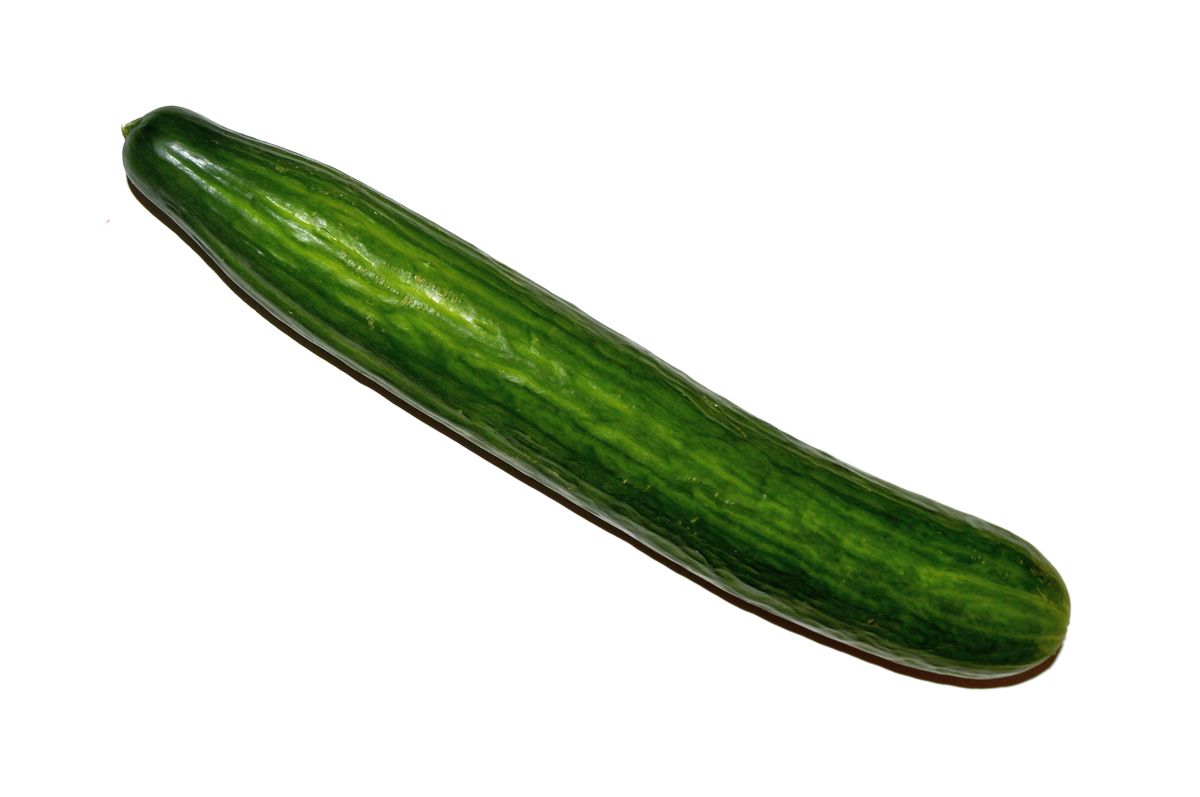
Vertical is not optional
Cucumbers are natural climbers and produce better fruit on a vertical stem. Run a string or a cane from the net pot up to a fixing at 1.8 m (5.9 ft) and wind the plant around it as it grows, or use soft ties.
Remove side shoots from the lower 30 cm (12 in) once the plant is established. Those lower laterals produce fruit that sits on the lid, stays wet, and rots.
Pinch out the growing tip once the plant reaches the top of its support, so energy goes into the fruit already set rather than into more vine.
Water consistency and bitterness
Cucurbitacin, the compound that makes a cucumber bitter, accumulates when the plant is stressed — particularly by irregular watering or wide temperature swings. A plant kept evenly moist produces sweet fruit; one that dries out and is then drenched will produce bitter fruit at the stem end.
Keep the reservoir level stable, check it twice daily in warm weather, and do not let a mature plant draw the bucket down more than a few centimetres. This is the crop most likely to run a small reservoir dry.
If fruit is bitter, cut the stem end off generously — the compound is concentrated there and the rest is usually usable.
Feeding
EC 1.6–2.0 through fruiting, pH 5.8–6.2. Cucumbers are less demanding than squash but still heavy drinkers, so the same rule applies: top up with plain water and change the reservoir every 10–14 days.
They are prone to magnesium deficiency in small reservoirs — yellowing between the veins on older leaves. A solution change fixes it faster than an additive.
Flowers and fruit set
Most modern varieties are gynoecious — they produce almost entirely female flowers — or parthenocarpic, meaning they set fruit without pollination at all. For indoor growing these are what you want, because there are no bees.
Older or open-pollinated varieties produce separate male and female flowers and need hand pollination, the same way as squash. If you are growing one of those, check the flowers daily and transfer pollen with a brush.
Saving seed
Cucumbers are insect-pollinated and cross readily with other varieties of Cucumis sativus. Isolation of 500 metres (1,640 ft) to a kilometre, or bagging and hand pollination.
The seed is embedded in a gel-filled cavity. Scoop it out, ferment it in a jar of water for two to three days until the gel breaks down and the viable seed sinks, then rinse and dry on paper for a week.
Note that parthenocarpic varieties set fruit without pollination, but they still need pollination to produce viable seed — so seed saving from them is unreliable unless you hand-pollinate deliberately.