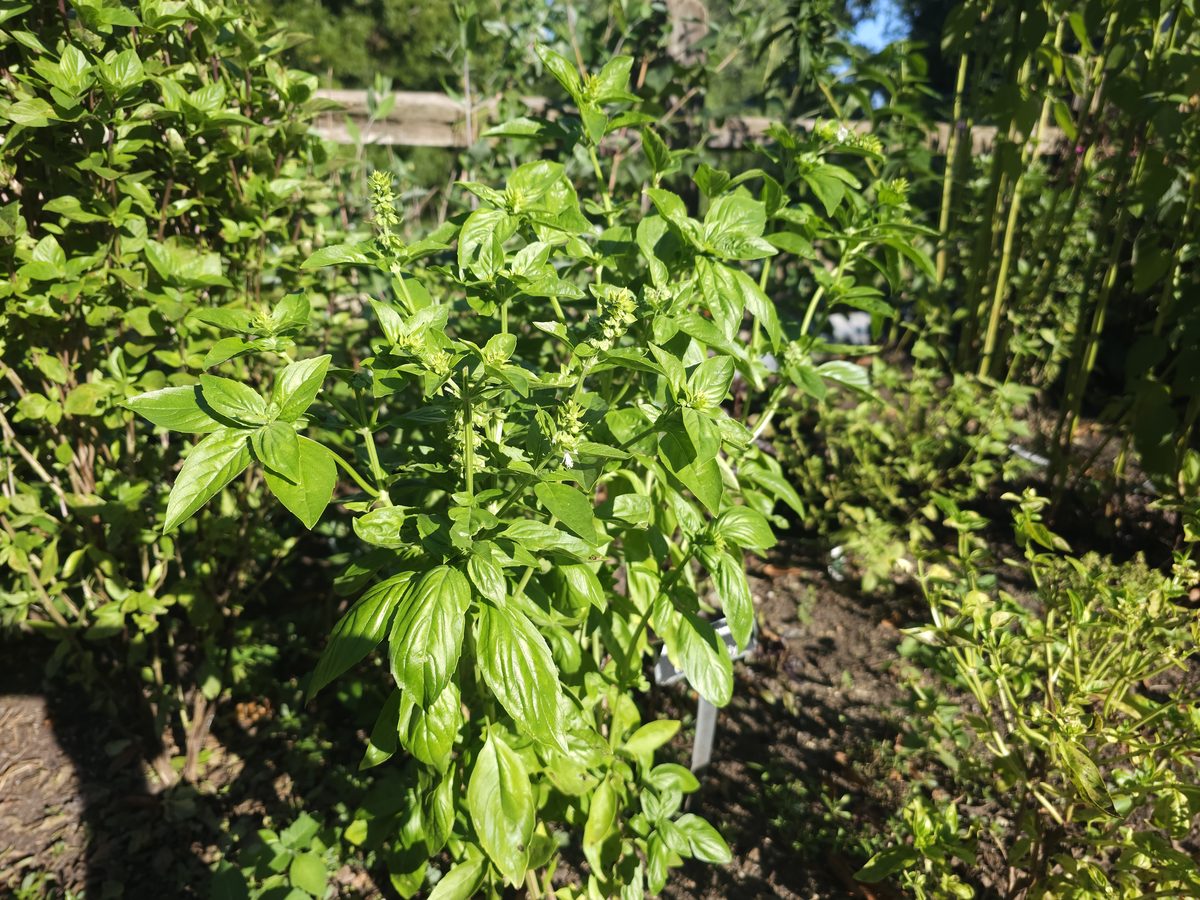
Two groups, two sets of conditions
Warm annuals — basil, coriander, dill. Want 20 °C (68 °F)+ and strong light. Coriander and dill bolt at the first sign of heat stress or a root check, so they need sowing little and often rather than one big crop.
Cool biennials and perennials — parsley, mint, chives, thyme. Tolerate cooler water and lower light, grow more slowly, and keep producing for much longer. Parsley is biennial: it makes leaf in year one and flowers in year two, then the leaf turns bitter.
Do not mix them in one reservoir if you can avoid it — the warm group wants a warmer solution than the cool group is happy with.
Coriander: the bolting problem
Coriander is the herb people give up on. It bolts — runs to flower — at around 24 °C (75 °F), and once the stem starts extending, leaf production stops and the leaves turn feathery and harsh.
The answer is not to fight it but to work with it. Sow a small pinch every two to three weeks so there is always a fresh plant coming on, and use the bolting plants for their seed, which is the coriander spice. A plant left to flower is not a failure; it is the second harvest.
Choose slow-bolt varieties and keep the reservoir cool — this is one of the crops where the chiller earns its place.
Parsley and mint: patience and roots
Parsley germinates slowly, three to four weeks, and unevenly. Soak the seed overnight before sowing and be patient. It is a biennial, so it will produce leaf for a full season and then flower — at which point the leaf becomes tough and bitter.
Mint is different again: it is a perennial that spreads by runners and is grown from divisions rather than seed. Seed-grown mint is rarely true to type because it crosses freely. If you want a specific mint, buy a plant and divide it.
Mint in a shared reservoir is a bad idea — it is vigorous and its roots will fill a net pot and outcompete anything beside it.
Harvesting to keep them producing
All herbs respond to cutting. Take stems, not individual leaves, and always cut above a node so the plant branches. Never strip more than a third of the foliage at once.
Cut in the morning before the heat of the day — essential oil content peaks then and the flavour is strongest. A plant cut regularly produces more leaf than one left alone; a plant left to flower stops producing leaf entirely.
Dill and coriander can be harvested as leaf, then allowed to flower for seed, then the seed used as spice. Three harvests from one plant.
Saving herb seed
All the culinary herbs are insect-pollinated and cross readily within their genus. Basil varieties cross with each other; dill crosses with fennel, which is a different genus but the same family and close enough to be a problem.
Basil and coriander are annual, so seed comes in the same season — let one plant flower, wait for the seed heads to brown, and harvest before they shatter. Dill and coriander seed shatters very readily; check daily once the heads turn.
Parsley is biennial and needs overwintering. Mint rarely sets viable true seed and is propagated by division instead.