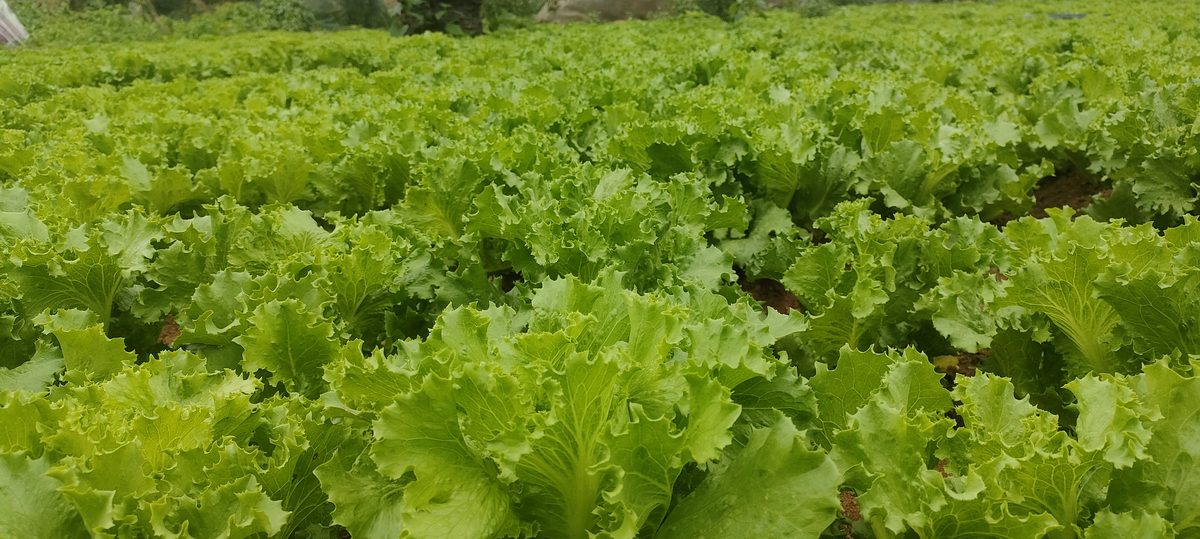
The two things that actually decide the outcome
Almost every lettuce problem traces back to water temperature or light intensity. Everything else — EC, pH, feeding schedule — matters, but those two set the ceiling.
Water temperature. Lettuce is a cool-season crop. Above roughly 24 °C (75 °F) in the root zone it stops growing properly and starts the process of sending up a flower stalk. Once bolting begins you cannot reverse it. If you have no chiller, grow lettuce in autumn, winter and spring, and choose the heat-tolerant varieties instead of fighting the summer.
Light. Lettuce wants more light than a windowsill in winter gives, and far less than a full grow lamp. Morning sun with afternoon shade is close to ideal. Too little light gives pale, thin, floppy leaves; too much, combined with warm water, gives bitter leaves and early bolting.
Sowing and germination
Lettuce seed needs light to germinate well, so surface-sow or barely cover — a few millimetres, never more than about 6 mm (0.24 in). Germination runs 7–14 days depending on temperature, with the sweet spot around 18–21 °C (64–70 °F). Above 25 °C (77 °F) lettuce seed enters thermodormancy and simply refuses to sprout; if you are sowing in a heatwave, put the tray somewhere cooler or start the seed in the fridge for 48 hours first.
You can direct-sow or transplant. Direct sowing avoids root disturbance and is fine outdoors, but for a DWC system transplanting a small seedling into the net pot gives a more even start. Sow two seeds per plug and thin to the strongest.
In the net pot and in the reservoir
Fill the net pot with clay pebbles, set the seedling so the crown sits just above the pebble line, and top up so the water is touching but not drowning the pot. Roots should reach the water within a few days; after that, keep the water level a couple of centimetres below the crown to stop it rotting.
Target EC depends on how much light the plant is getting. Under strong light 1.6–1.8 mS/cm is reasonable; under a windowsill, 1.2–1.4 is safer, because a plant that cannot photosynthesise fast enough will not use the nutrients and they accumulate. pH 6.0 is a good midpoint.
Because the crop is short, you can run an entire cycle on one reservoir fill. Change it anyway at about day 21 — by then the plant has consumed the balance of the mix and the ratio has drifted.
Harvesting so the plant keeps going
You have two options and they give different results. Cut the whole head at the base for a clean single harvest, or take the outer leaves only and leave the crown intact. The second approach can give you three or four cuts across two weeks, and it better suits a small reservoir where a full head would crowd the lid.
Harvest in the morning. Lettuce puts on cell turgor overnight and is at its crispest before the lights or sun have warmed it. Put it in cold water immediately after cutting; it will hold for a week in the fridge and a few hours on the counter.
When it bolts
A central stem shooting upward with a cluster at the top means the plant has decided to reproduce. The leaves turn bitter and leathery, and no amount of cool water will reverse it. Pull it and replant — the cycle is short enough that this costs you three weeks, not a season.
If you only catch it early — the very first hint of a stem — cutting it off buys a few days, but that is all. Treat bolting as a design problem: if it happens twice at the same time of year, that is your reservoir temperature telling you something.
The failure to expect first
Tipburn. Brown edges on the newest inner leaves, usually in a plant that otherwise looks healthy. It is a calcium distribution problem, not a calcium shortage — the nutrient is present but cannot reach the fast-growing leaf edges, usually because the plant is transpiring poorly or the solution is too salty. Lower the EC, keep the water cool, and increase airflow. Do not add calcium; it will not help.