Cascadia
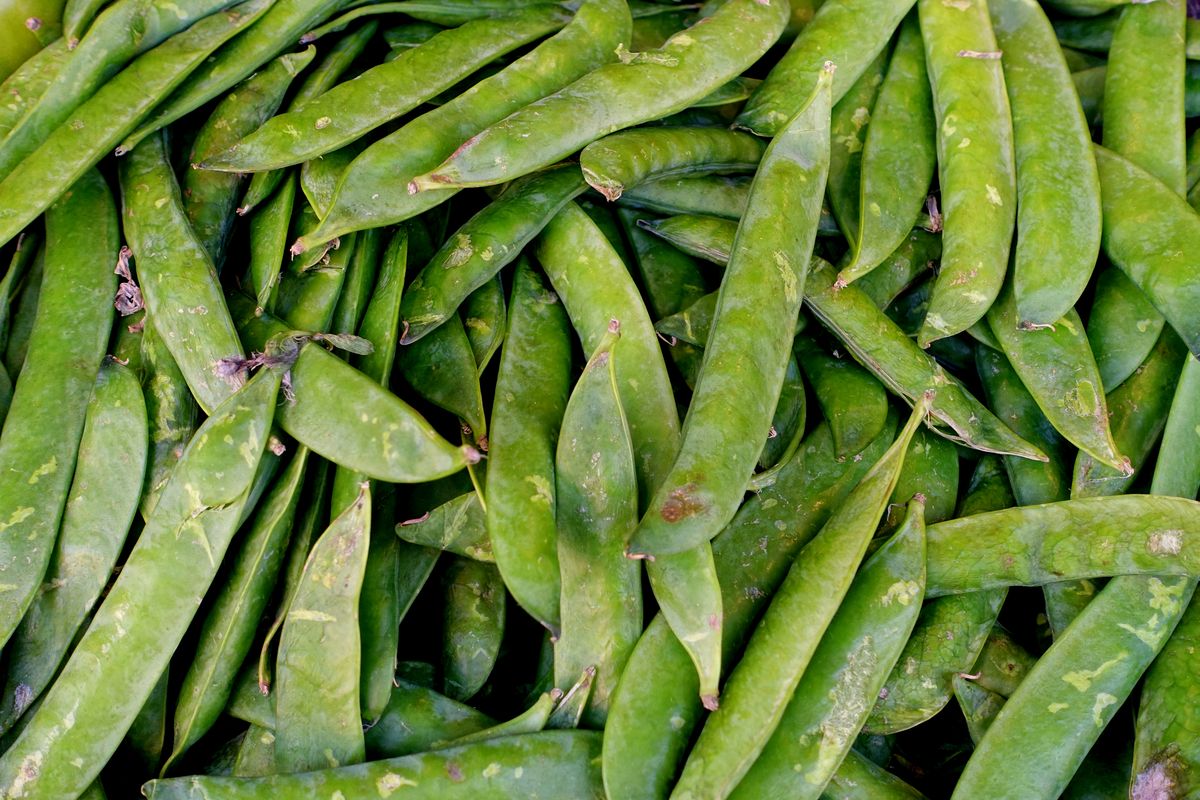
Cascadia: 60 days to harvest, 7-14 days to germinate, 2-3 inches between plants, pH 6.0-7.0, hardy in zones 2-11. Fruit runs to about 2 1/2-3". Give it full sun to partial shade (4-6+ hours) and 1 inch per week, consistent moisture for best pod quality water. It will crop in a container.
Sowing
Direct sow 2-4 weeks before last frost. Can succession plant every 2 weeks for continuous harvest.
Cultivation
- Sun
- Full sun to partial shade (4-6+ hours)
- Water
- 1 inch per week, consistent moisture for best pod quality
- Soil
- Well-drained, fertile soil with good organic matter
- Soil pH
- 6.0-7.0
- Spacing
- 2-3 inches
- Height
- 12-18 inches
- Season
- Warm season annual
Appearance & flavour
- Colour
- Bright green, plump edible pods
- Size
- 2 1/2-3"
- Shape
- Thick, crunchy pods with visible peas, eaten whole
- Flavour
- Very sweet, crisp, and crunchy with excellent snap pea flavor
In the kitchen
Fresh snacking, stir-fries, salads, steaming. Pods and peas eaten together while tender.
Pests, disease & resistance
- Pests
- Aphids, thrips, pea weevils, leaf miners
- Diseases
- Root rot (in poorly drained soils), bacterial blight, downy mildew
- Resistance
- Fusarium Wilt (Intermediate); Pea Enation Mosaic Virus (High); Powdery Mildew (Intermediate)
Planting calendar by USDA zone
| Zone | Start indoors | Transplant | Direct sow | Harvest |
|---|---|---|---|---|
| 1 | — | — | June – July | August – September |
| 2 | — | — | May – July | July – September |
| 3 | — | — | May – June | July – October |
| 4 | — | — | April – June | June – October |
| 5 | — | — | April – May | June – November |
| 6 | — | — | April – May | June – November |
| 7 | — | — | March – May | May – November |
| 8 | — | — | March – April | May – December |
| 9 | — | — | February – March | April – December |
| 10 | — | — | January – March | March – December |
| 11 | — | — | January – February | February – December |
| 12 | — | — | January – February | February – December |
| 13 | — | — | January – February | February – December |
Companion planting
8 beneficial pairings indexed for this variety, 3 to avoid.
Avoid
Nutrition (per 100 g)
- Calories (per 100 g)
- 81
- Protein (g)
- 5.42
- Fat (g)
- 0.4
- Carbohydrate (g)
- 14.4
- Fibre (g)
- 5.7
- Sugars (g)
- 5.67
- Vitamin A (µg)
- 38
- Vitamin C (mg)
- 40
- Vitamin E (mg)
- 0.13
- Vitamin K (µg)
- 24.8
- Vitamin B6 (mg)
- 0.169
- Folate (µg)
- 65
- Calcium (mg)
- 25
- Iron (mg)
- 1.47
- Magnesium (mg)
- 33
- Phosphorus (mg)
- 108
- Potassium (mg)
- 244
- Zinc (mg)
- 1.24
- Selenium (µg)
- 1.8
Where to buy seed and equipment
Some links are affiliate links. If you buy through them we may earn a commission at no extra cost to you.
Cultivar facts compiled from public horticultural references including USDA GRIN and NC State Extension. Descriptions are original to this catalogue.
Grown Cascadia?
Post a crop report — day counts, reservoir readings, what worked. Variety-specific logs are the most useful thing on the forum.
Similar varieties
Other peas with a comparable time to harvest, so a season that suits Cascadia suits these too.
- Oregon Sugar Pod II 60 days
- Progress No. 9 60 days
- Dwarf Grey Sugar 60 days
- Mr. Big 60 days
- Snowbird 60 days
- Oregon Giant 60 days