Mammoth Melting Sugar
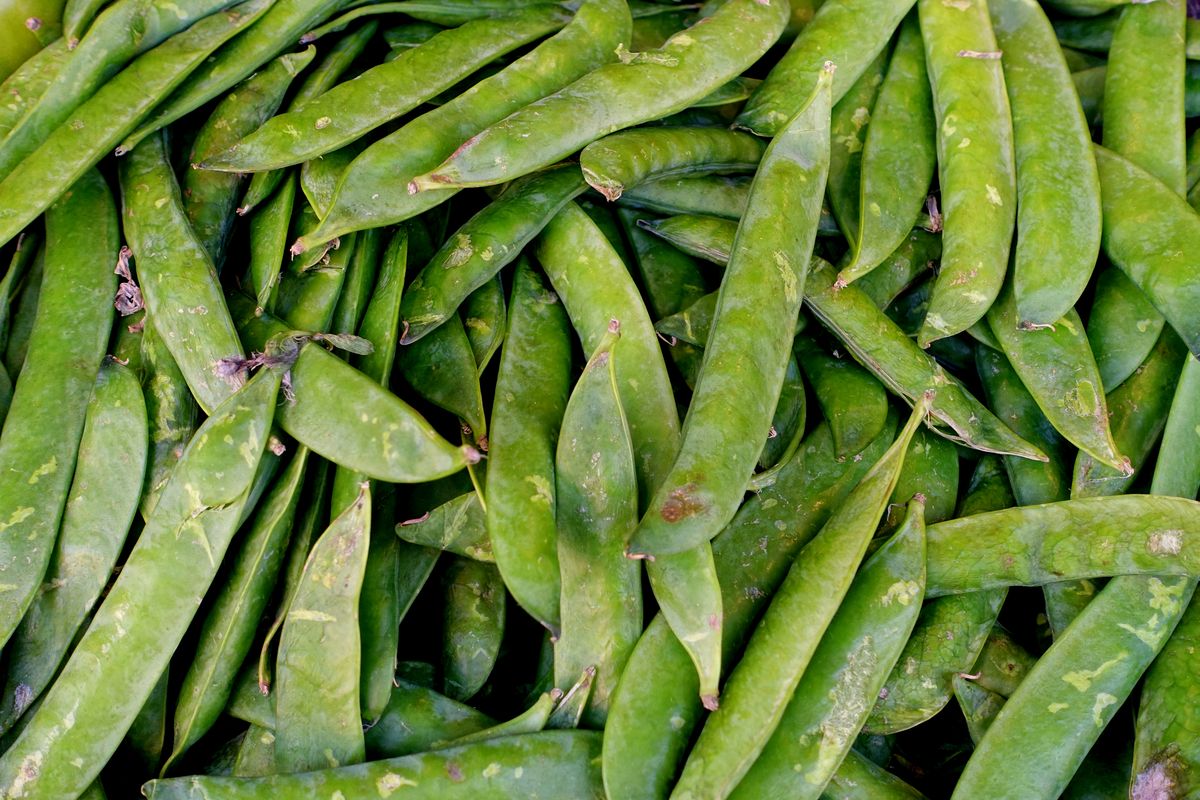
Mammoth Melting Sugar is a large, flat, broad snow pea pods with minimal pea development pea with fruit around 4-5 inch long, wide flat pods. Ready from roughly day 70-80. Germination takes 7-14 days. Space 3-4 inches apart at pH 6.0-7.5. Full sun to partial shade (4-6+ hours).
Sowing
Direct sow 4-6 weeks before last frost. Requires tall, sturdy support structure due to height.
Cultivation
- Sun
- Full sun to partial shade (4-6+ hours)
- Water
- 1-1.5 inches per week, consistent moisture during pod development
- Soil
- Rich, well-drained soil with good organic content
- Soil pH
- 6.0-7.5
- Spacing
- 3-4 inches
- Height
- 12-18 inches
- Season
- Cool season
Appearance & flavour
- Colour
- Pale green, flat edible pods
- Size
- 4-5 inch long, wide flat pods
- Shape
- Large, flat, broad snow pea pods with minimal pea development
- Flavour
- Sweet, tender, crisp with delicate pea flavor and no strings
In the kitchen
Stir-fries, fresh salads, steaming, sautéing. Pods eaten whole while young and tender.
Pests, disease & resistance
- Pests
- Aphids, pea moths, thrips, slugs
- Diseases
- Powdery mildew, downy mildew, root rot, pea enation mosaic virus
- Resistance
- Limited disease resistance typical of heirlooms. Susceptible to powdery mildew in humid conditions.
Planting calendar by USDA zone
| Zone | Start indoors | Transplant | Direct sow | Harvest |
|---|---|---|---|---|
| 1 | — | — | June – July | August – September |
| 2 | — | — | May – July | August – September |
| 3 | — | — | May – June | July – October |
| 4 | — | — | April – June | July – October |
| 5 | — | — | April – May | June – November |
| 6 | — | — | April – May | June – November |
| 7 | — | — | March – May | June – November |
| 8 | — | — | March – April | May – December |
| 9 | — | — | February – March | April – December |
| 10 | — | — | January – March | April – December |
| 11 | — | — | January – February | March – December |
| 12 | — | — | January – February | March – December |
| 13 | — | — | January – February | March – December |
Companion planting
8 beneficial pairings indexed for this variety, 3 to avoid.
Avoid
Nutrition (per 100 g)
- Calories (per 100 g)
- 81
- Protein (g)
- 5.42
- Fat (g)
- 0.4
- Carbohydrate (g)
- 14.4
- Fibre (g)
- 5.7
- Sugars (g)
- 5.67
- Vitamin A (µg)
- 38
- Vitamin C (mg)
- 40
- Vitamin E (mg)
- 0.13
- Vitamin K (µg)
- 24.8
- Vitamin B6 (mg)
- 0.169
- Folate (µg)
- 65
- Calcium (mg)
- 25
- Iron (mg)
- 1.47
- Magnesium (mg)
- 33
- Phosphorus (mg)
- 108
- Potassium (mg)
- 244
- Zinc (mg)
- 1.24
- Selenium (µg)
- 1.8
Where to buy seed and equipment
Some links are affiliate links. If you buy through them we may earn a commission at no extra cost to you.
Cultivar facts compiled from public horticultural references including USDA GRIN and NC State Extension. Descriptions are original to this catalogue.
Grown Mammoth Melting Sugar?
Post a crop report — day counts, reservoir readings, what worked. Variety-specific logs are the most useful thing on the forum.
Similar varieties
Other peas with a comparable time to harvest, so a season that suits Mammoth Melting Sugar suits these too.
- Carouby de Maussane 70 days
- Alderman 70 days
- Survivor 70 days
- Blue Podded Blauwschokker 70 days
- Wando 68 days
- Tall Telephone 68 days