Clover Microgreens
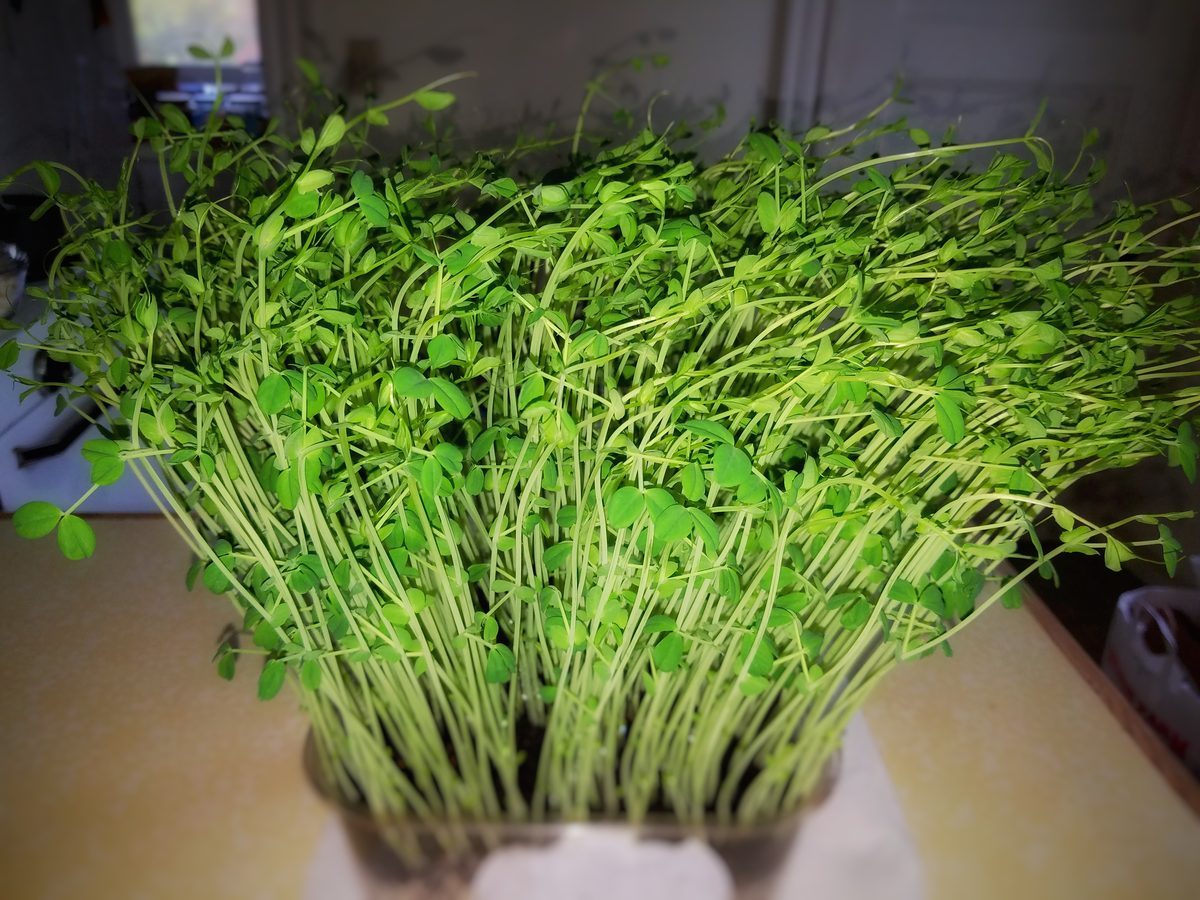
Clover Microgreens is a heirloom microgreen. Germination takes 3-7 days and fruit ripens from about day 8-12. Skin runs to bright green leaves with pale green stems. Water need is moderate — regular watering. Suits zones 3-10. It will crop in a container.
Sowing
Soak seeds 4-8 hours, sow densely on growing medium, keep in darkness 2-3 days until germination.
Cultivation
- Sun
- Full sun to partial shade (4-6+ hours)
- Water
- Moderate — regular watering
- Soil
- Soilless growing medium or organic potting mix
- Soil pH
- 6.0-7.0
- Spacing
- Dense planting, 1-2 seeds per square inch
- Height
- 4-6 inches
- Season
- Perennial
Appearance & flavour
- Colour
- Bright green leaves with pale green stems
- Size
- 8"
- Shape
- Characteristic three-leaflet clover shape
- Flavour
- Sweet, mild, pea-like flavor with tender, succulent texture
In the kitchen
Salads, garnishes, sandwiches, smoothies, microgreen mixes, herbal preparations
Pests, disease & resistance
- Pests
- Aphids occasionally, spider mites in dry conditions
- Diseases
- Root rot from overwatering, powdery mildew in humid conditions
- Resistance
- Generally resistant to most diseases, hardy legume
Planting calendar by USDA zone
| Zone | Start indoors | Transplant | Direct sow | Harvest |
|---|---|---|---|---|
| 1 | January – December | — | — | January – December |
| 2 | January – December | — | — | January – December |
| 3 | January – December | — | — | January – December |
| 4 | January – December | — | — | January – December |
| 5 | January – December | — | — | January – December |
| 6 | January – December | — | — | January – December |
| 7 | January – December | — | — | January – December |
| 8 | January – December | — | — | January – December |
| 9 | January – December | — | — | January – December |
| 10 | January – December | — | — | January – December |
| 11 | January – December | — | — | January – December |
| 12 | January – December | — | — | January – December |
| 13 | January – December | — | — | January – December |
Companion planting
8 beneficial pairings indexed for this variety, 3 to avoid.
Avoid
Nutrition (per 100 g)
- Calories (per 100 g)
- 69
- Protein (g)
- 1.5
- Fat (g)
- 0.1
- Carbohydrate (g)
- 17.6
- Fibre (g)
- 5.3
- Sugars (g)
- 8.55
- Vitamin A (µg)
- 5
- Vitamin C (mg)
- 54.1
- Calcium (mg)
- 8
- Iron (mg)
- 1.61
- Magnesium (mg)
- 24
- Phosphorus (mg)
- 47
- Potassium (mg)
- 304
- Zinc (mg)
- 0.31
Where to buy seed and equipment
Some links are affiliate links. If you buy through them we may earn a commission at no extra cost to you.
Cultivar facts compiled from public horticultural references including USDA GRIN and NC State Extension. Descriptions are original to this catalogue.
Grown Clover Microgreens?
Post a crop report — day counts, reservoir readings, what worked. Variety-specific logs are the most useful thing on the forum.
Similar varieties
Other microgreens with a comparable time to harvest, so a season that suits Clover Microgreens suits these too.
- Red Clover Microgreens 8 days
- Buckwheat Microgreens 8 days
- Fenugreek Microgreens 7 days
- Mizuna Microgreens 7 days
- Chia Microgreens 7 days
- Pea Shoots 7 days