Red Amaranth Microgreens
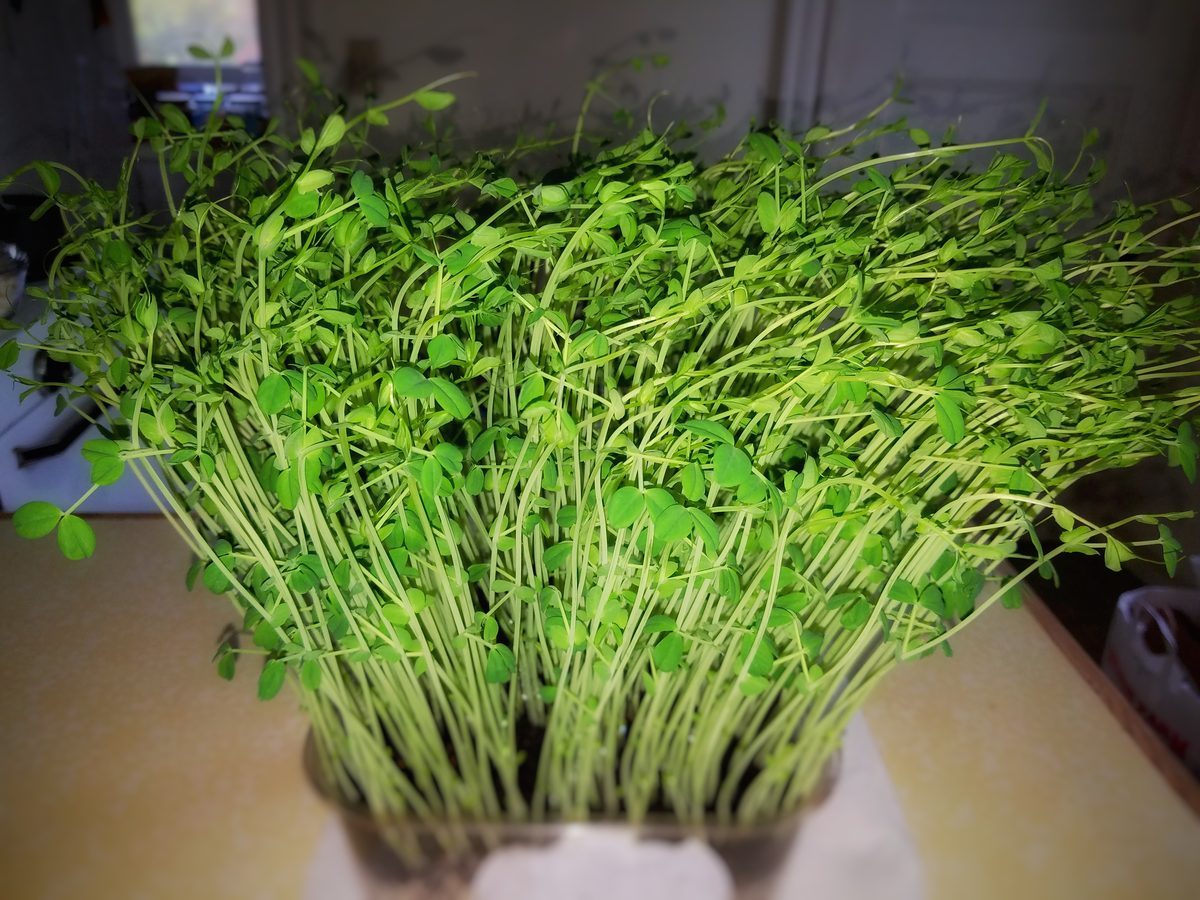
Red Amaranth Microgreens is a small oval leaves on colorful stems microgreen with fruit around 1-2 inches tall at harvest. Ready from roughly day 65-75. Germination takes 2-3 days. Space Dense planting, 1-2 seeds per square inch apart at pH 6.0-7.0. Indirect light or grow lights for 12-16 hours daily. It will crop in a container.
Sowing
Soak seeds 4-6 hours, then sow densely on growing medium. Cover lightly and mist gently.
Cultivation
- Sun
- Indirect light or grow lights for 12-16 hours daily
- Water
- Light misting 2-3 times daily, avoid overwatering
- Soil
- Soilless growing medium or fine potting mix
- Soil pH
- 6.0-7.0
- Spacing
- Dense planting, 1-2 seeds per square inch
- Height
- 1-2 inches
- Season
- Warm season annual
Appearance & flavour
- Colour
- Bright magenta-red stems with deep red-green leaves
- Size
- 1-2 inches tall at harvest
- Shape
- Small oval leaves on colorful stems
- Flavour
- Mild, earthy, slightly sweet with tender texture
In the kitchen
Salad garnish, sandwich topping, smoothie bowls, microgreen mix, restaurant plating
Pests, disease & resistance
- Pests
- Aphids (rare in microgreen stage), fungus gnats
- Diseases
- Damping off from overwatering, root rot from poor drainage
- Resistance
- Generally disease-free when grown properly with good air circulation
Planting calendar by USDA zone
| Zone | Start indoors | Transplant | Direct sow | Harvest |
|---|---|---|---|---|
| 1 | January – December | — | — | January – December |
| 2 | January – December | — | — | January – December |
| 3 | January – December | — | — | January – December |
| 4 | January – December | — | — | January – December |
| 5 | January – December | — | — | January – December |
| 6 | January – December | — | — | January – December |
| 7 | January – December | — | — | January – December |
| 8 | January – December | — | — | January – December |
| 9 | January – December | — | — | January – December |
| 10 | January – December | — | — | January – December |
| 11 | January – December | — | — | January – December |
| 12 | January – December | — | — | January – December |
| 13 | January – December | — | — | January – December |
Companion planting
8 beneficial pairings indexed for this variety, 3 to avoid.
Avoid
Nutrition (per 100 g)
- Calories (per 100 g)
- 69
- Protein (g)
- 1.5
- Fat (g)
- 0.1
- Carbohydrate (g)
- 17.6
- Fibre (g)
- 5.3
- Sugars (g)
- 8.55
- Vitamin A (µg)
- 5
- Vitamin C (mg)
- 54.1
- Calcium (mg)
- 8
- Iron (mg)
- 1.61
- Magnesium (mg)
- 24
- Phosphorus (mg)
- 47
- Potassium (mg)
- 304
- Zinc (mg)
- 0.31
Where to buy seed and equipment
Some links are affiliate links. If you buy through them we may earn a commission at no extra cost to you.
Cultivar facts compiled from public horticultural references including USDA GRIN and NC State Extension. Descriptions are original to this catalogue.
Grown Red Amaranth Microgreens?
Post a crop report — day counts, reservoir readings, what worked. Variety-specific logs are the most useful thing on the forum.
Similar varieties
Other microgreens with a comparable time to harvest, so a season that suits Red Amaranth Microgreens suits these too.
- Cabbage Microgreens 68 days
- Red Cabbage Microgreens 68 days
- Lemon Balm Microgreens 70 days
- Watercress 60 days
- Basil Microgreens 74 days
- Beet Microgreens 55 days