Marigold, Gem
Marigold, Gem: 16-25 days to harvest, 4-7 days to germinate, hardy in zones 2-11. Fruit runs to about 4 g. Give it full sun (6+ hours) and moderate; bottom-water after germination water.
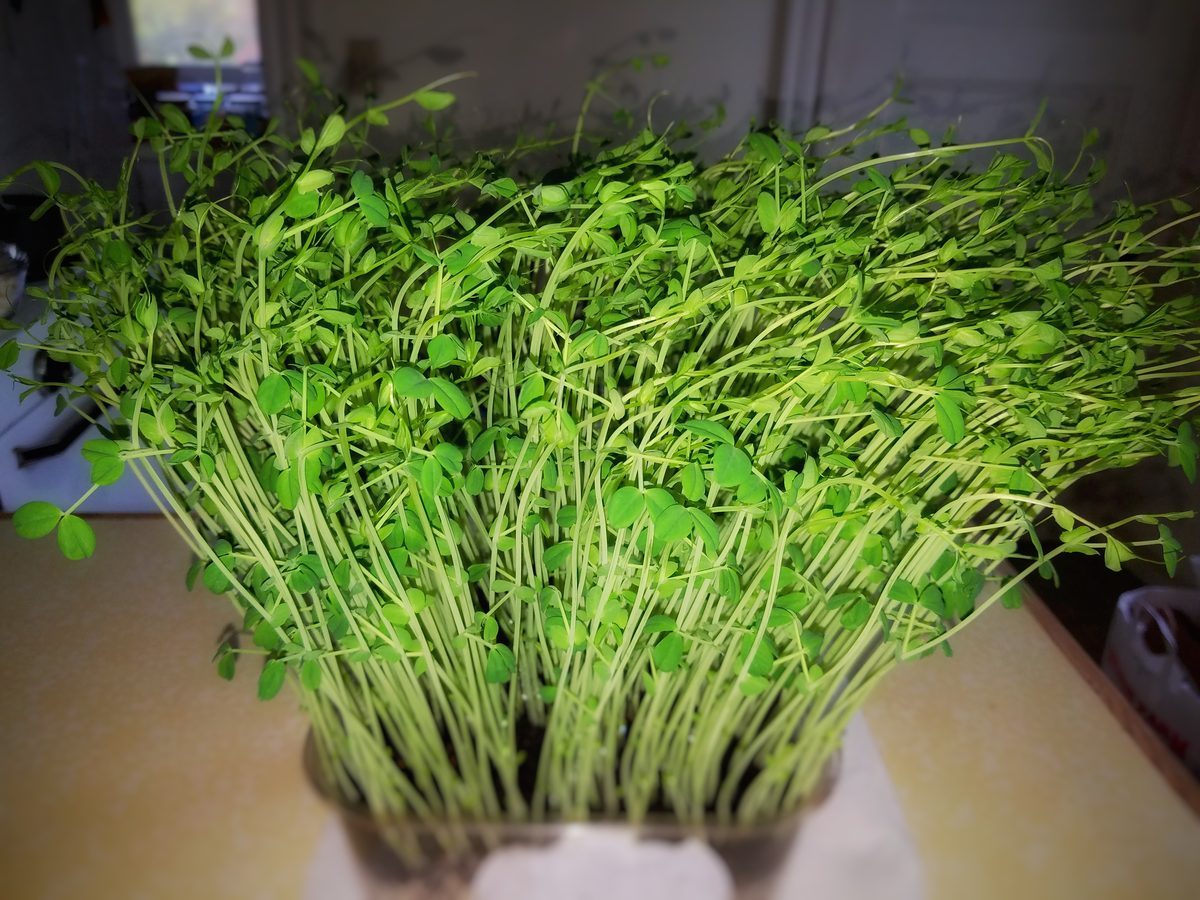
Sowing
Surface sow 4 grams per 1020 tray, press in, blackout 4-6 days
Cultivation
- Sun
- Full sun (6+ hours)
- Water
- Moderate; bottom-water after germination
- Soil
- Fine-textured soilless microgreen mix or coco coir blend
- Height
- 8-30 inches
- Season
- Warm season annual
Appearance & flavour
- Colour
- Yellow-green with lacy true leaves
- Size
- 4 g
- Shape
- Feathery, finely dissected foliage on slender stems
- Flavour
- Spicy and herbal with light citrus undertones, similar to tarragon crossed with tangerine zest — only fully develops at the true-leaf stage.
In the kitchen
Dessert garnish, cocktail garnish, plated entrée garnish, sorbet topping, infused simple syrups, salad accent
Pests, disease & resistance
- Diseases
- Damping off, gray mold (Botrytis) during extended grow cycle if airflow is poor
Planting calendar by USDA zone
| Zone | Start indoors | Transplant | Direct sow | Harvest |
|---|---|---|---|---|
| 1 | January – December | — | — | January – December |
| 2 | January – December | — | — | January – December |
| 3 | January – December | — | — | January – December |
| 4 | January – December | — | — | January – December |
| 5 | January – December | — | — | January – December |
| 6 | January – December | — | — | January – December |
| 7 | January – December | — | — | January – December |
| 8 | January – December | — | — | January – December |
| 9 | January – December | — | — | January – December |
| 10 | January – December | — | — | January – December |
| 11 | January – December | — | — | January – December |
| 12 | January – December | — | — | January – December |
| 13 | January – December | — | — | January – December |
Companion planting
8 beneficial pairings indexed for this variety, 3 to avoid.
Avoid
Nutrition (per 100 g)
- Calories (per 100 g)
- 69
- Protein (g)
- 1.5
- Fat (g)
- 0.1
- Carbohydrate (g)
- 17.6
- Fibre (g)
- 5.3
- Sugars (g)
- 8.55
- Vitamin A (µg)
- 5
- Vitamin C (mg)
- 54.1
- Calcium (mg)
- 8
- Iron (mg)
- 1.61
- Magnesium (mg)
- 24
- Phosphorus (mg)
- 47
- Potassium (mg)
- 304
- Zinc (mg)
- 0.31
Where to buy seed and equipment
Some links are affiliate links. If you buy through them we may earn a commission at no extra cost to you.
Cultivar facts compiled from public horticultural references including USDA GRIN and NC State Extension. Descriptions are original to this catalogue.
Grown Marigold, Gem?
Post a crop report — day counts, reservoir readings, what worked. Variety-specific logs are the most useful thing on the forum.
Similar varieties
Other microgreens with a comparable time to harvest, so a season that suits Marigold, Gem suits these too.
- Dill Microgreens 16 days
- Carrot Microgreens 16 days
- Carrot 16 days
- Leek 16 days
- Cilantro Microgreens 16 days
- Scallion, Evergreen Hardy White 16 days