Red Cabbage Microgreens
Red Cabbage Microgreens is a hybrid microgreen variety (Brassica oleracea var. capitata). Harvest begins around day 68; seed germinates in 3-5 days. Set plants Dense seeding, 1 oz seeds per 10x20 tray apart. Grow in soil pH 5.5-6.5, zones 6-9, full sun to partial shade (4-6+ hours). Plants reach 10-24 inches. It will crop in a container. Hybrid seed does not come true, so it has to be bought fresh each season rather than saved.
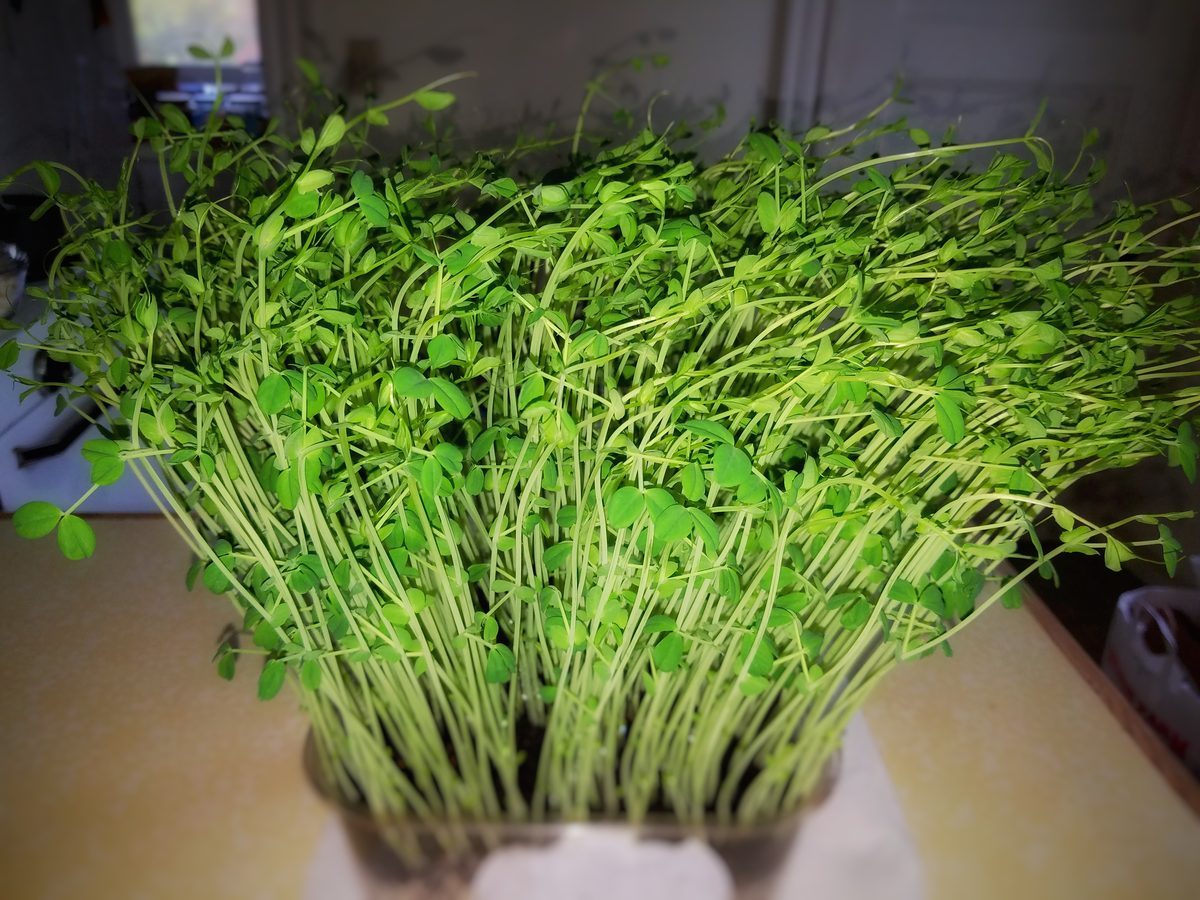
Sowing
Sow seeds directly on moist growing medium, cover with humidity dome. No soaking required.
Cultivation
- Sun
- Full sun to partial shade (4-6+ hours)
- Water
- Mist regularly, maintain consistent moisture without waterlogging
- Soil
- Fine potting mix or coconut coir with good drainage
- Soil pH
- 5.5-6.5
- Spacing
- Dense seeding, 1 oz seeds per 10x20 tray
- Height
- 10-24 inches
- Season
- Warm season annual
Appearance & flavour
- Colour
- Deep purple-red stems with vibrant purple cotyledons
- Size
- 1 1/2-2 lb.
- Shape
- Delicate stems with small heart-shaped cotyledons
- Flavour
- Mild cabbage flavor with slight peppery notes and tender texture
In the kitchen
Salads, garnishes, sandwiches, wraps, microgreen mixes, smoothies
Pests, disease & resistance
- Pests
- Flea beetles, aphids, fungus gnats
- Diseases
- Damping off, clubroot, black leg (rare in microgreen production)
- Resistance
- Good disease resistance typical of brassicas when grown in clean conditions
Planting calendar by USDA zone
| Zone | Start indoors | Transplant | Direct sow | Harvest |
|---|---|---|---|---|
| 1 | January – December | — | — | January – December |
| 2 | January – December | — | — | January – December |
| 3 | January – December | — | — | January – December |
| 4 | January – December | — | — | January – December |
| 5 | January – December | — | — | January – December |
| 6 | January – December | — | — | January – December |
| 7 | January – December | — | — | January – December |
| 8 | January – December | — | — | January – December |
| 9 | January – December | — | — | January – December |
| 10 | January – December | — | — | January – December |
| 11 | January – December | — | — | January – December |
| 12 | January – December | — | — | January – December |
| 13 | January – December | — | — | January – December |
Companion planting
8 beneficial pairings indexed for this variety, 3 to avoid.
Avoid
Nutrition (per 100 g)
- Calories (per 100 g)
- 25
- Protein (g)
- 1.28
- Fat (g)
- 0.1
- Carbohydrate (g)
- 5.8
- Fibre (g)
- 2.5
- Sugars (g)
- 3.2
- Vitamin A (µg)
- 5
- Vitamin C (mg)
- 36.6
- Vitamin E (mg)
- 0.15
- Vitamin K (µg)
- 76
- Vitamin B6 (mg)
- 0.124
- Folate (µg)
- 43
- Calcium (mg)
- 40
- Iron (mg)
- 0.47
- Magnesium (mg)
- 12
- Phosphorus (mg)
- 26
- Potassium (mg)
- 170
- Zinc (mg)
- 0.18
- Selenium (µg)
- 0.3
Where to buy seed and equipment
Some links are affiliate links. If you buy through them we may earn a commission at no extra cost to you.
Cultivar facts compiled from public horticultural references including USDA GRIN and NC State Extension. Descriptions are original to this catalogue.
Grown Red Cabbage Microgreens?
Post a crop report — day counts, reservoir readings, what worked. Variety-specific logs are the most useful thing on the forum.
Similar varieties
Other microgreens with a comparable time to harvest, so a season that suits Red Cabbage Microgreens suits these too.
- Cabbage Microgreens 68 days
- Lemon Balm Microgreens 70 days
- Red Amaranth Microgreens 65 days
- Basil Microgreens 74 days
- Chives Microgreens 75 days
- Watercress 60 days