Purple Radish Microgreens
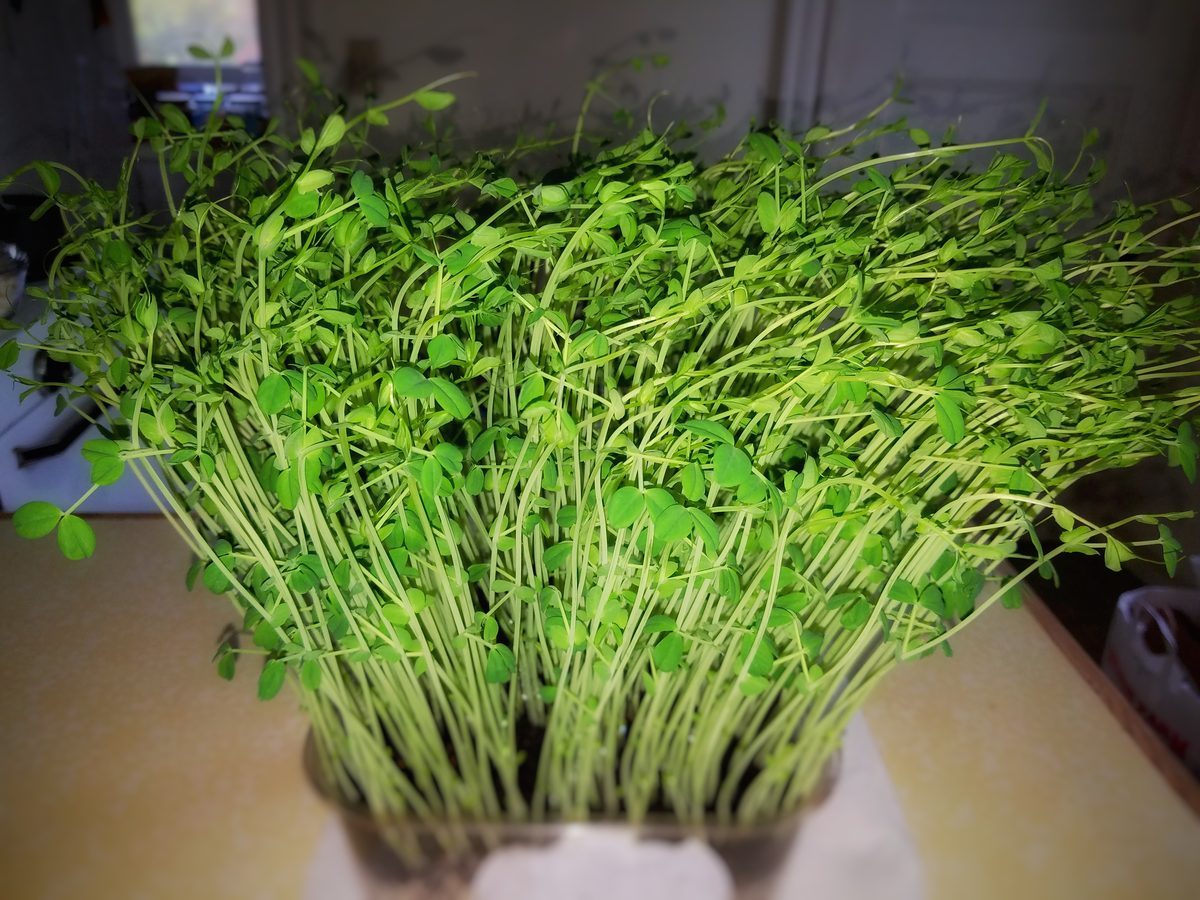
Purple Radish Microgreens is a round to oval cotyledons on sturdy colored stems microgreen with fruit around 1-2 inch cotyledons on colorful stems. Ready from roughly day 6-12. Germination takes 2-3 days. Space Dense broadcast seeding apart at pH 6.0-7.0. Indirect light or grow lights. It will crop in a container.
Sowing
Soak seeds 4-6 hours for faster germination. Broadcast densely on growing medium, lightly cover, and mist regularly. No blackout period needed.
Cultivation
- Sun
- Indirect light or grow lights
- Water
- Daily misting, consistent moisture
- Soil
- Any soilless growing medium
- Soil pH
- 6.0-7.0
- Spacing
- Dense broadcast seeding
- Height
- 0-3 feet
- Season
- Year-round indoors
Appearance & flavour
- Colour
- Bright purple-red stems with vibrant green cotyledons
- Size
- 1-2 inch cotyledons on colorful stems
- Shape
- Round to oval cotyledons on sturdy colored stems
- Flavour
- Crisp, peppery, and spicy with classic radish bite and slight sweetness
In the kitchen
Salads, sandwiches, garnishes, tacos, avocado toast, microgreen mixes
Pests, disease & resistance
- Pests
- Flea beetles if grown outdoors, minimal issues indoors
- Diseases
- Very disease resistant, occasional damping-off if overwatered
- Resistance
- Excellent disease resistance
Planting calendar by USDA zone
| Zone | Start indoors | Transplant | Direct sow | Harvest |
|---|---|---|---|---|
| 1 | January – December | — | — | January – December |
| 2 | January – December | — | — | January – December |
| 3 | January – December | — | — | January – December |
| 4 | January – December | — | — | January – December |
| 5 | January – December | — | — | January – December |
| 6 | January – December | — | — | January – December |
| 7 | January – December | — | — | January – December |
| 8 | January – December | — | — | January – December |
| 9 | January – December | — | — | January – December |
| 10 | January – December | — | — | January – December |
| 11 | January – December | — | — | January – December |
| 12 | January – December | — | — | January – December |
| 13 | January – December | — | — | January – December |
Companion planting
8 beneficial pairings indexed for this variety, 3 to avoid.
Avoid
Nutrition (per 100 g)
- Calories (per 100 g)
- 16
- Protein (g)
- 0.68
- Fat (g)
- 0.1
- Carbohydrate (g)
- 3.4
- Fibre (g)
- 1.6
- Sugars (g)
- 1.86
- Vitamin A (µg)
- 0
- Vitamin C (mg)
- 14.8
- Vitamin E (mg)
- 0
- Vitamin K (µg)
- 1.3
- Vitamin B6 (mg)
- 0.071
- Folate (µg)
- 25
- Calcium (mg)
- 25
- Iron (mg)
- 0.34
- Magnesium (mg)
- 10
- Phosphorus (mg)
- 20
- Potassium (mg)
- 233
- Zinc (mg)
- 0.28
- Selenium (µg)
- 0.6
Where to buy seed and equipment
Some links are affiliate links. If you buy through them we may earn a commission at no extra cost to you.
Cultivar facts compiled from public horticultural references including USDA GRIN and NC State Extension. Descriptions are original to this catalogue.
Grown Purple Radish Microgreens?
Post a crop report — day counts, reservoir readings, what worked. Variety-specific logs are the most useful thing on the forum.
Similar varieties
Other microgreens with a comparable time to harvest, so a season that suits Purple Radish Microgreens suits these too.
- Mustard Microgreens 6 days
- Mung Bean Microgreens 6 days
- Alfalfa Microgreens 6 days
- Wheatgrass Microgreens 7 days
- Pea Shoots 7 days
- Broccoli Microgreens 7 days